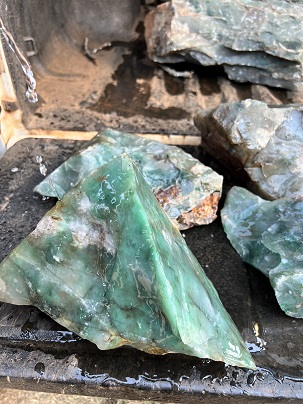
Tiger eye
Introduction
Tiger's eye (Tigerite or Tiger's eye), or tiger's eye stone, is a gemstone with a cat's eye effect, mostly yellowish brown, with silk-like light patterns inside the gemstone. Tiger eye is one of the varieties of quartz, which can be replaced by pseudomorphs made of crocidolite fiber silicon. The blue variant produced by the incomplete process of silicification is called "Hawkeye".
Tiger eye stone, also known as tiger eye stone, is a variety of quartz. The colors are divided into blue-gray blue tiger eyes, reddish-brown red tiger eyes, and yellow-brown yellow tiger eyes. They have the same characteristics as cat's eye stones and have a cat's eye effect. Because they are mostly yellow-brown, they are named tiger eye stones.
1/ Red Tiger Eye
According to the different trace elements, there are also red tiger eyes. For the common yellow tiger eyes, red tiger eyes are less produced and relatively rare. The red tiger eye corresponds to the sea chakra, and the reddish brown represents enthusiasm and courage. It is suitable for young women to wear. It can improve the indecision and timid character, and has stable energy to help us practice. Strong vitality helps us improve our physical condition and stay away from diseases.
2/ Blue Tiger Eye
The effect of blue tiger's eye stone is quite special, corresponding to the brow chakra, helping to understand the truth and bring help in interpersonal relationships. He improves our overeating situation and has a good effect on the stomach. Secondly, the blue tiger eye stone makes people physically flexible and is suitable for the elderly to wear. If it is almost black, it can help the body discharge negative energy, it is called "Eagle Eye Stone".
3/ Yellow Tiger Eye
In India, the yellow tiger's eye symbolizes nobility and is a sacred stone in the hearts of Indians, because the yellow and black color resembles the unique pattern of tigers. The effect of yellow tiger eye is to enhance psychological energy, inspire courage and help us achieve our goals quickly. Yellow also represents wealth. The taboo of yellow tiger's eye stone is that it cannot be worn together with Bodhisattva and cabbage. This is because Bodhisattva is benevolent and benevolent, which conflicts with the domineering and ferocious tiger. Tiger itself is a carnivorous animal. Wearing cabbage symbolizes the tiger's vegetarianism, just like a paper tiger.
Tiger eye stone, also known as tiger eye stone, is a variety of quartz. The colors are divided into blue-gray blue tiger eyes, reddish-brown red tiger eyes, and yellow-brown yellow tiger eyes. They have the same characteristics as cat's eye stones and have a cat's eye effect. Because they are mostly yellow-brown, they are named tiger eye stones.
1/ Red Tiger Eye
According to the different trace elements, there are also red tiger eyes. For the common yellow tiger eyes, red tiger eyes are less produced and relatively rare. The red tiger eye corresponds to the sea chakra, and the reddish brown represents enthusiasm and courage. It is suitable for young women to wear. It can improve the indecision and timid character, and has stable energy to help us practice. Strong vitality helps us improve our physical condition and stay away from diseases.
2/ Blue Tiger Eye
The effect of blue tiger's eye stone is quite special, corresponding to the brow chakra, helping to understand the truth and bring help in interpersonal relationships. He improves our overeating situation and has a good effect on the stomach. Secondly, the blue tiger eye stone makes people physically flexible and is suitable for the elderly to wear. If it is almost black, it can help the body discharge negative energy, it is called "Eagle Eye Stone".
3/ Yellow Tiger Eye
In India, the yellow tiger's eye symbolizes nobility and is a sacred stone in the hearts of Indians, because the yellow and black color resembles the unique pattern of tigers. The effect of yellow tiger eye is to enhance psychological energy, inspire courage and help us achieve our goals quickly. Yellow also represents wealth. The taboo of yellow tiger's eye stone is that it cannot be worn together with Bodhisattva and cabbage. This is because Bodhisattva is benevolent and benevolent, which conflicts with the domineering and ferocious tiger. Tiger itself is a carnivorous animal. Wearing cabbage symbolizes the tiger's vegetarianism, just like a paper tiger.